

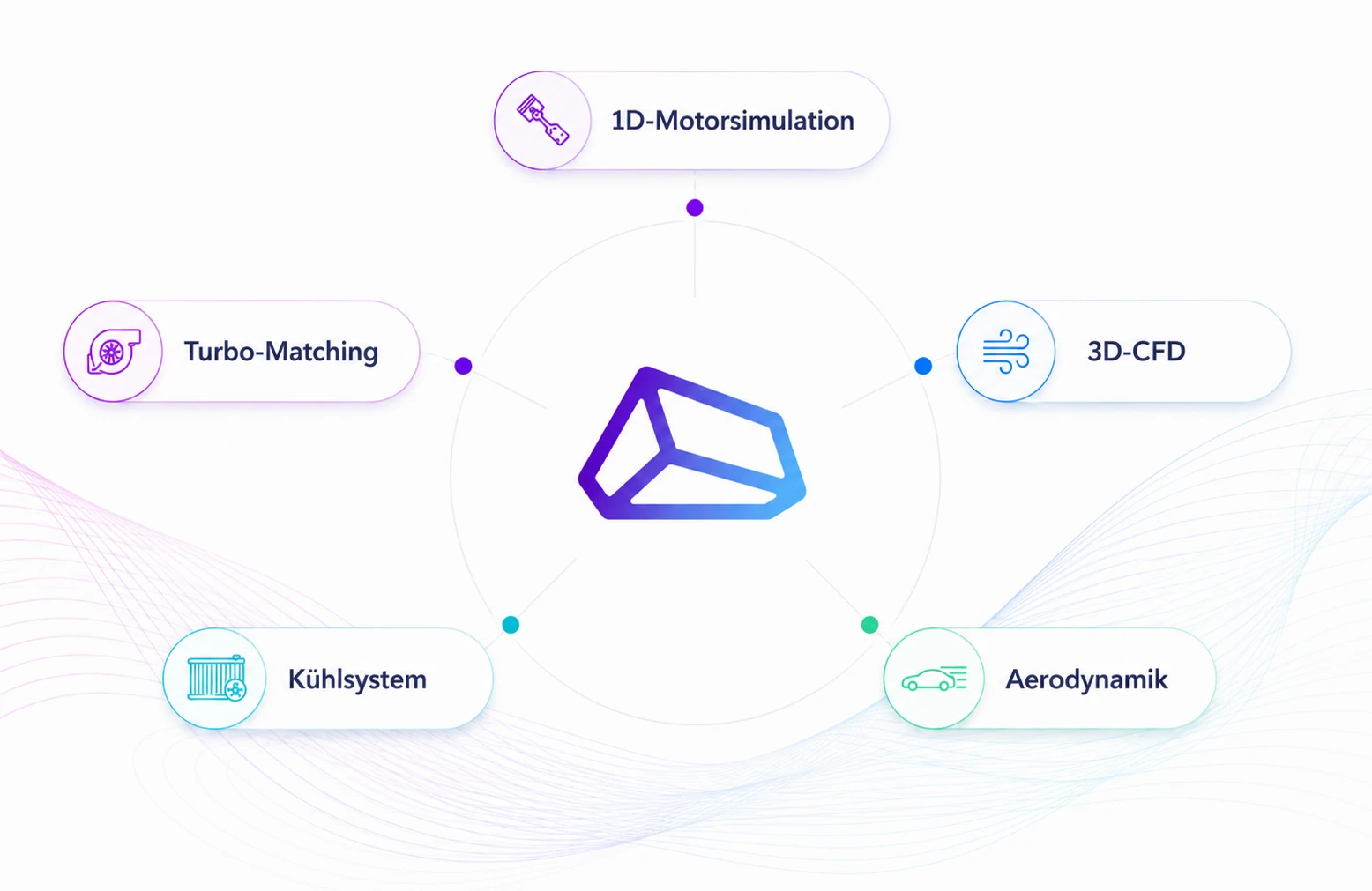
Felsaris supports the development of small series vehicles and performance vehicles from component design to validated thermal management – with simulation-based methodology and industrial precision.
context
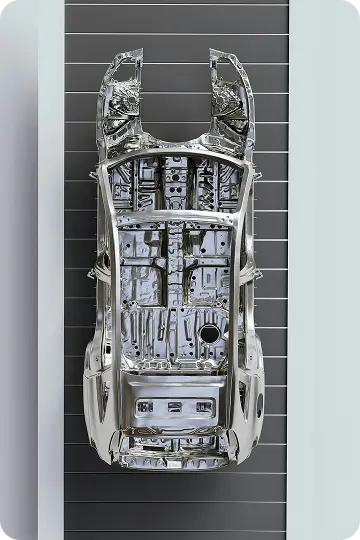
A small-series production vehicle is not a simplified version of a mass-produced vehicle. It is a vehicle that must meet all the technical requirements of mass production – with a fraction of the resources, without years of testing, and without the safety nets of a fully developed platform.
Every decision counts twice. Every iteration costs disproportionately. And errors in thermal management or component design don’t occur in the lab – but on the road or on the racetrack.
challenges
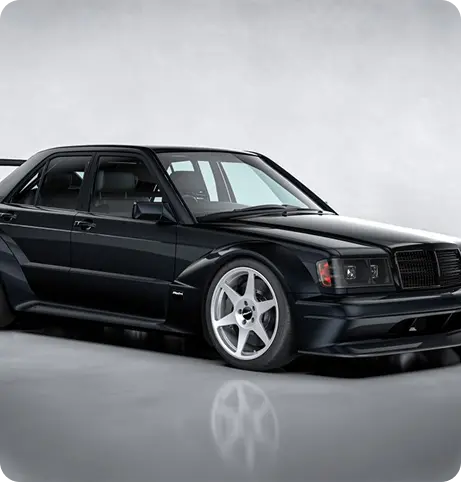
Today’s high-performance vehicles must comply with EU6 emissions standards while simultaneously being prepared for the upcoming EU7 requirements by mid-2030. The conflicting objectives of performance, emissions, thermal management, and installation space necessitate a clean, simulation-based design using GT-SUITE.
We are not just a general engineering service provider. Felsaris specializes in the specific requirements of small-series vehicles and performance vehicles, utilizing development methods developed in motorsport-related projects and within the environment of performance OEMs.




My personal experience is a rare mix of great warmth, excellent professionalism, and extensive knowledge across various areas of engineering and CFD. His approachable nature makes collaboration feel effortless, while demonstrating genuine care for both the client and the project. This is complemented by his professionalism, which is organized, prepared, efficient, and highly reliable.
As someone who values effectiveness and honesty, I can confidently say that David delivers. His expertise provides exceptional value, often feeling like the equivalent of having two or three engineers working on a project. He consistently finds practical, creative, and efficient solutions that work without unnecessary complexity.
It is clear that he has a true passion for engineering and science and maintains a high standard of professional service. This combination is invaluable for companies and individuals seeking both outstanding results and a positive collaboration experience.
David R Chen | 12.08.2025
We were extremely impressed with the consulting services provided by Mr. Leimann. His support was consistently competent, reliable, and customer-focused. He handled demanding tasks with exceptional precision and communicated project milestones clearly and understandably.
The collaboration was excellent, and the results exceeded our expectations. We highly recommend his services without reservation.
We award 5 out of 5 stars.

There is no fixed threshold: what matters is not the number of units but the ratio between technical demands and available development resources. As soon as a vehicle has to meet full production-grade requirements without the time or budget for years of testing, simulation pays off from the very first project. That is exactly the range we work in – from one-offs and prototypes up to series in the low hundreds.
We reproduce the critical operating states in simulation before any hardware is built: full load while stationary, uphill driving at high ambient temperatures, heat soak after shutdown. Using CFD and conjugate heat transfer, we see temperature peaks, cooling bottlenecks and pressure losses in detail – often in places that are never instrumented during road testing. The design is validated up front instead of being corrected expensively on the prototype.
Yes. Using 1D engine cycle simulation, we evaluate compressor and turbine maps against your load profile and find the layout that builds boost early without choking at high engine speeds. Because the model is built once and then runs variants in minutes, late changes to the engine, exhaust system or target output can be re-evaluated quickly.
We lay the vehicle out so that performance and durability work together: the simulation assesses not just the best lap figure, but component temperatures, emissions and behaviour over the operating life. That keeps motorsport-level targets achievable without breaking the requirements for road approval.
Then we provide it – for a defined period and without you having to build up licences, computing capacity or headcount. Our on-demand packages make additional engineering capacity available at short notice, for a few weeks or across several months. Software licences are already included, so no additional fixed costs arise.
Yes. Many development projects around small-series vehicles meet the criteria for public funding: the ZIM programme provides grants for upcoming research and development projects, and the German research allowance lets you reclaim a substantial share of your development costs retroactively through your tax return. We assess your project free of charge and, if you wish, handle the entire application process.
Every project runs under an NDA, and your data stays strictly within the project context. Design states, measurement data and simulation results are never used for other clients or as references unless you explicitly release them. On request, we work entirely inside your own system environment.

