Simulation and engineering for engines, cooling systems and aerodynamics

Simulation and engineering for engines, cooling systems and aerodynamics

For automotive, motorsport and low-volume production, we combine 1D and 3D simulation with data analysis to design, validate and further develop engines, cooling systems and vehicle concepts.

0 +

Years of engineering experience in automotive, motorsport and simulation

Trusted by

Hydrogen Engine Development

Simulation Services

Engineering for Low-Volume Vehicles

Research Allowance (FZuIG)

Recover up to 35% of your development costs retroactively

Zim Funding

Secure government grants for upcoming research and development projects.

CFD Flow Simulation

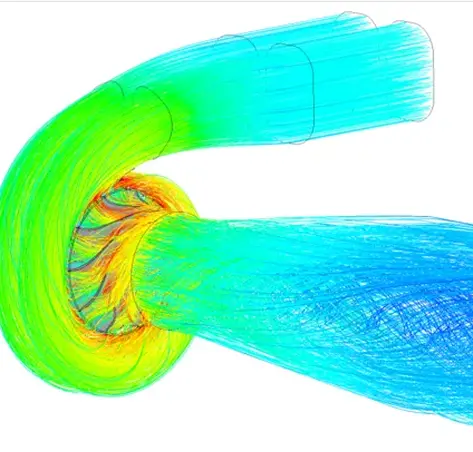
With CFD flow simulations, we analyze air, gas, and liquid flows during the development phase and identify critical areas such as pressure losses, flow separation, and thermal hot spots. This enables the targeted optimization of flow channels, cooling systems, valves, and piping networks—without the need for extensive physical testing.
As a result, development risks, testing efforts, and costly prototype iterations can be significantly reduced.

Engine Development

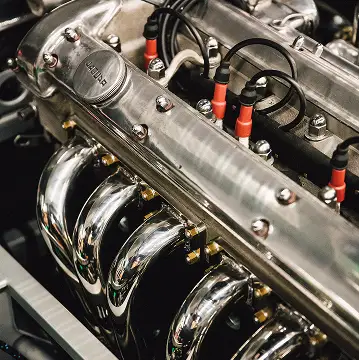
Using 1D system simulations, we develop and analyze combustion and hydrogen engines at the system level. Key interactions and performance characteristics can be evaluated at an early stage of development, long before extensive engine test bench trials become necessary.
With GT-SUITE and GT-POWER from Gamma Technologies, we virtually model the interaction between the intake system, turbocharging, combustion process, exhaust system, and thermal management. This enables the early analysis and evaluation of performance, fuel consumption, temperatures, and pressure profiles.
Our typical projects include the design of air intake and exhaust systems, optimization of turbocharger systems, and the development of hydrogen engines.
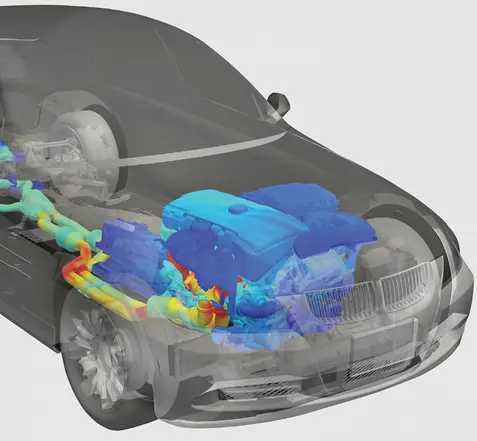
Thermal management is often a decisive factor in a product’s performance. Using thermal simulations, we analyze cooling concepts for electronics, batteries, fuel cells, electric motors, and other thermally stressed systems to identify critical temperatures and overheating risks at an early stage.
We evaluate temperature distributions, heat flows, and cooling strategies under realistic operating conditions, enabling us to detect local hot spots and thermal weaknesses before they become costly issues.
Our core expertise includes the cooling of power electronics, battery packs, fuel cell systems, and electric drivetrains, as well as the optimization of air- and liquid-cooling solutions.

Aerodynamics

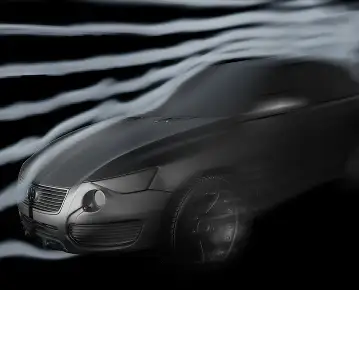
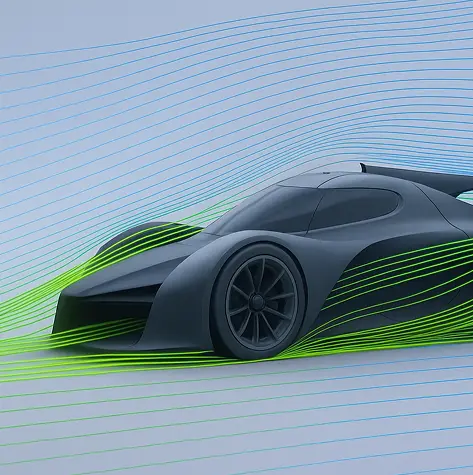
With aerodynamic simulations, we support the development of vehicles, drones, airfoils, and marine applications. We analyze drag, lift, stability, and flow phenomena such as flow separation and pressure distribution, and use these insights to develop targeted optimization strategies for geometry and aerodynamic performance.
This enables the efficient optimization of vehicles, drones, wings, and cooling systems, helping to significantly reduce development effort, testing requirements, and overall project costs.

CFD: Combustion & Emissions

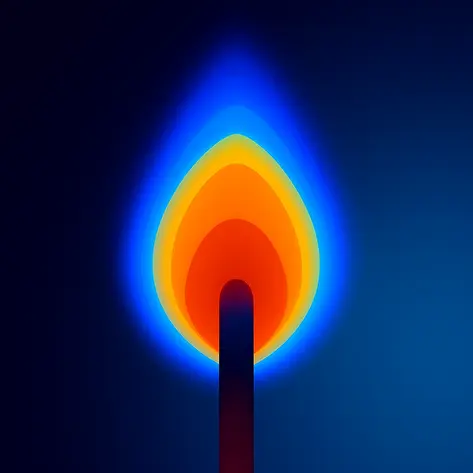
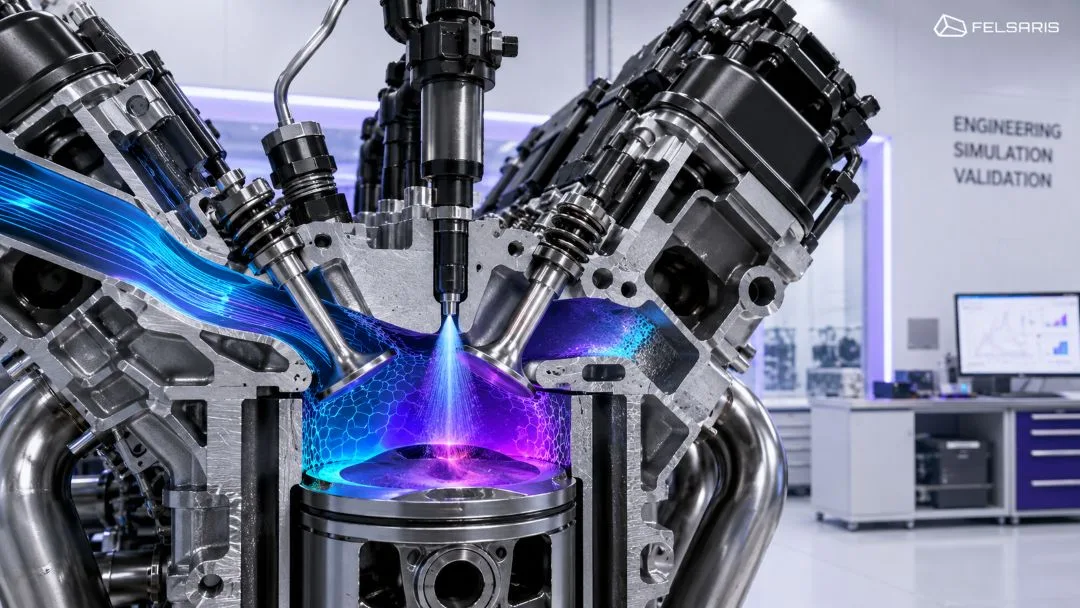
CFD combustion simulations provide detailed insight into combustion processes for both conventional and alternative fuels. Combustion behavior and emission formation can be evaluated during the early stages of development, helping to reduce development risks and costly iteration cycles.
We analyze mixture formation, fuel injection processes, combustion, heat release, and pollutant formation using advanced flow and reaction models. Our expertise also includes the selection and validation of reaction mechanisms as well as the assessment of innovative combustion concepts.
Applications range from combustion simulations for gaseous and liquid fuels to feasibility studies of new combustion technologies, as well as investigations into emission generation and pollutant formation.

Hydrogen engines

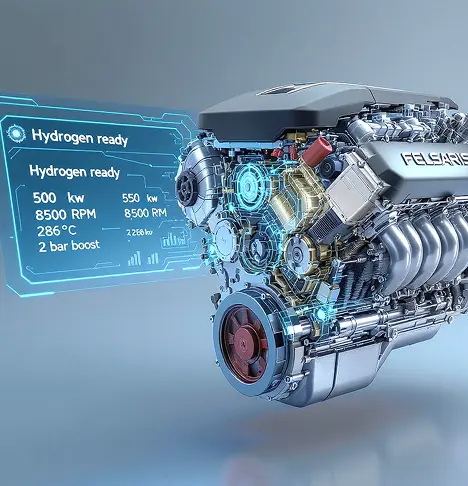
Hydrogen engines are gaining importance as an alternative solution for applications where high power output, short refueling times, or the use of existing engine platforms are key requirements. Our focus is on the design and optimization of hydrogen internal combustion engines for both mobile and stationary applications.
Our expertise covers the development of air-path systems, fuel injection systems, turbocharging, and thermal management, as well as the analysis of combustion processes, efficiency, and emissions. By leveraging virtual development methods, technical challenges can be evaluated at an early stage of development, helping to reduce risks and enabling informed decisions for further design optimization and validation.

Research allowance

The Research Allowance is a tax incentive for research and development projects under the German Research Allowance Act (Forschungszulagengesetz). Many companies carry out eligible R&D activities but do not take advantage of the available funding opportunities.
We assess the eligibility of your projects, prepare the required technical application documentation, and support you throughout the entire application process. This includes assistance with describing the state of the art, technical uncertainties, and the planned or completed R&D activities.
Depending on the size of the company, up to 35% of eligible project costs may be funded. Applications can also be submitted retroactively for ongoing or completed projects for up to four years after the relevant fiscal year.

CFD Flow Simulation

With CFD flow simulations, we analyze air, gas, and liquid flows during the development phase and identify critical areas such as pressure losses, flow separation, and thermal hot spots. This enables the targeted optimization of flow channels, cooling systems, valves, and piping networks—without the need for extensive physical testing.
As a result, development risks, testing efforts, and costly prototype iterations can be significantly reduced.

Engine Development

In engine development, we combine 1D system simulation in GT-SUITE and GT-POWER with 3D CFD, test bench data, automated test data analysis and data-driven methods. We analyse the interaction of the air path, turbocharging, combustion, exhaust and thermal management, and assess power, fuel consumption, emissions and thermal boundary conditions. Our focus is on practical results that low-volume manufacturers, motorsport teams and specialised engine developers can use quickly, from concept development, reengineering and turbo matching through to validation.

Cooling

Thermal management is essential for the performance, efficiency and operational safety of thermally stressed systems. Using thermal simulation, we analyse temperature distributions, heat flows and cooling concepts under realistic operating conditions. This allows hot spots, thermal weaknesses and critical component temperatures to be identified early. Our focus includes electronics, batteries, fuel cells and electric motors, as well as the design and optimisation of air and liquid cooling.

Aerodynamics

With aerodynamic simulations, we support the development of vehicles, drones, airfoils, and marine applications. We analyze drag, lift, stability, and flow phenomena such as flow separation and pressure distribution, and use these insights to develop targeted optimization strategies for geometry and aerodynamic performance.
This enables the efficient optimization of vehicles, drones, wings, and cooling systems, helping to significantly reduce development effort, testing requirements, and overall project costs.

CFD: Combustion & Emissions

CFD combustion simulations provide detailed insight into combustion processes for conventional and alternative fuels. Mixture formation, injection, combustion, heat release and pollutant formation can be analysed at an early stage of development. This includes selecting and validating suitable reaction mechanisms and evaluating new combustion concepts. Applications range from gaseous and liquid fuels and feasibility studies through to investigations of emission and pollutant formation.

Hydrogen engines

Our focus is the design and optimisation of hydrogen internal combustion engines for mobile and stationary applications. Our work covers air-path design, injection systems, turbocharging and thermal management, as well as analysis of combustion, efficiency and emissions. We also address these topics in the HYLIGHT research project funded by the BMFTR. Virtual development methods allow technical questions to be assessed at an early stage and provide a sound basis for further design and validation.

Research allowance

The Research Allowance is a tax incentive for research and development projects under the German Research Allowance Act (Forschungszulagengesetz). Many companies carry out eligible R&D activities but do not take advantage of the available funding opportunities.
We assess the eligibility of your projects, prepare the required technical application documentation, and support you throughout the entire application process. This includes assistance with describing the state of the art, technical uncertainties, and the planned or completed R&D activities.
Depending on the size of the company, up to 35% of eligible project costs may be funded. Applications can also be submitted retroactively for ongoing or completed projects for up to four years after the relevant fiscal year.

About us

Felsaris develops and optimises technical systems virtually before changes are implemented in hardware or testing. We combine Computer Aided Engineering (CAE), 1D and 3D simulation, CFD and data-driven methods for design, analysis and optimisation.

What makes us different

Small and medium-sized companies value our practical approach, direct communication and personal collaboration. Felsaris brings a young team and modern simulation and data-driven methods to engineering. This creates flexible, technically sound solutions with a direct connection to development practice.

Who we are

Meet our team and the values that guide our work every day.

Our promise

We provide a sound basis for technical decisions early in development. From feasibility studies through to validation, simulation and data-driven methods deliver results that can be used quickly for design, variant comparison and optimisation.

Engineering projects on request or with flexible on-demand support:

Contact us for a tailored quotation for your project, or explore whether our flexible CFD on-demand services are the right fit for getting started quickly.

CFD development expertise on demand

Immediate simulation capacity and planning certainty for your development project. Our experts from pre-development and motorsport will help you optimize flow, engine performance, turbo matching, cooling capacity, pressure loss, supplier communication, and much more. If required, we use our own software and computers, so you don’t have to make any investments and can still access state-of-the-art simulation results.

from

€6,000

plus VAT.
  • No minimum contract term
  • Detailed reports with optimisation recommendations
  • Assessment of flow and cooling potential
  • Support in setting up your own CFD department and best practices
  • Engineering services starting at 50 hours/month
  • On-site assignments and integration into your processes when required
  • We can provide our software licences (STAR-CCM+, GT-SUITE) when required
  • HPC hours are billed separately when required
  • Free parallel assessment of funding eligibility

Value For Money

Frequently asked questions

Felsaris supports companies in developing and validating technical products and systems. Our focus is on 3D CFD flow simulation, 1D engine simulation with GT-SUITE and GT-POWER, engine development, thermal management and cooling, aerodynamics, and data analysis. Depending on the project, we handle individual simulation tasks or complete engineering work packages.

Our focus is on automotive, motorsport and low-volume vehicles, as well as technical systems in which flow, heat transfer, cooling or combustion play a central role. We particularly support companies with demanding development challenges, a lack of in-house simulation capacity, or additional CAE needs in ongoing projects.

1D simulation is particularly suited to the behaviour of complete systems such as engines, intake and exhaust paths, turbochargers or cooling circuits. 3D CFD resolves local flow and heat transfer effects in space, for example radiator airflow, pressure losses, underhood flow, aerodynamics or combustion processes. For complex development tasks, we combine both methods.

Yes. Our engineering support is available for individual projects or as flexible on-demand capacity. We handle CFD calculations, 1D simulations, variant studies, data analysis and turbo matching, for example, and can provide our own software licences and computing capacity when needed. Integration into existing development teams and on-site assignments are also possible.

With 1D system simulation, we virtually model the interaction of intake, turbocharging, combustion, exhaust systems and thermal management. This allows us to investigate power, torque, air mass flow, boost pressure, temperatures and pressure profiles across different operating points. For turbo matching, we evaluate compressor and turbine maps in the context of the complete engine.

Yes. We use data-driven methods to systematically analyse simulation, test bench and measurement data. These include stochastic experimental design and Design of Experiments (DoE), regression models, sensitivity analyses, surrogate models and automated data analysis. Both newly generated data and existing historical measurement and test data can be included.

Yes. For hydrogen internal combustion engines, we support air-path development, gas injection and fuel injection systems, turbocharging, thermal management and combustion analysis. Using 1D and 3D simulation, power, efficiency, temperatures, mixture formation and emission formation can be investigated during virtual development, allowing different concepts to be evaluated.

The German Research Allowance (Forschungszulage) can be particularly relevant for research and development projects. Subject to the applicable requirements, it provides tax-based support for eligible R&D expenditure. ZIM is also generally relevant for innovative development projects at SMEs. However, a temporary suspension of regular new ZIM applications and project outlines has been in place since 7 July 2026. The resumption of applications is targeted for early 2027 and depends on the available budget.

Our top blog articles

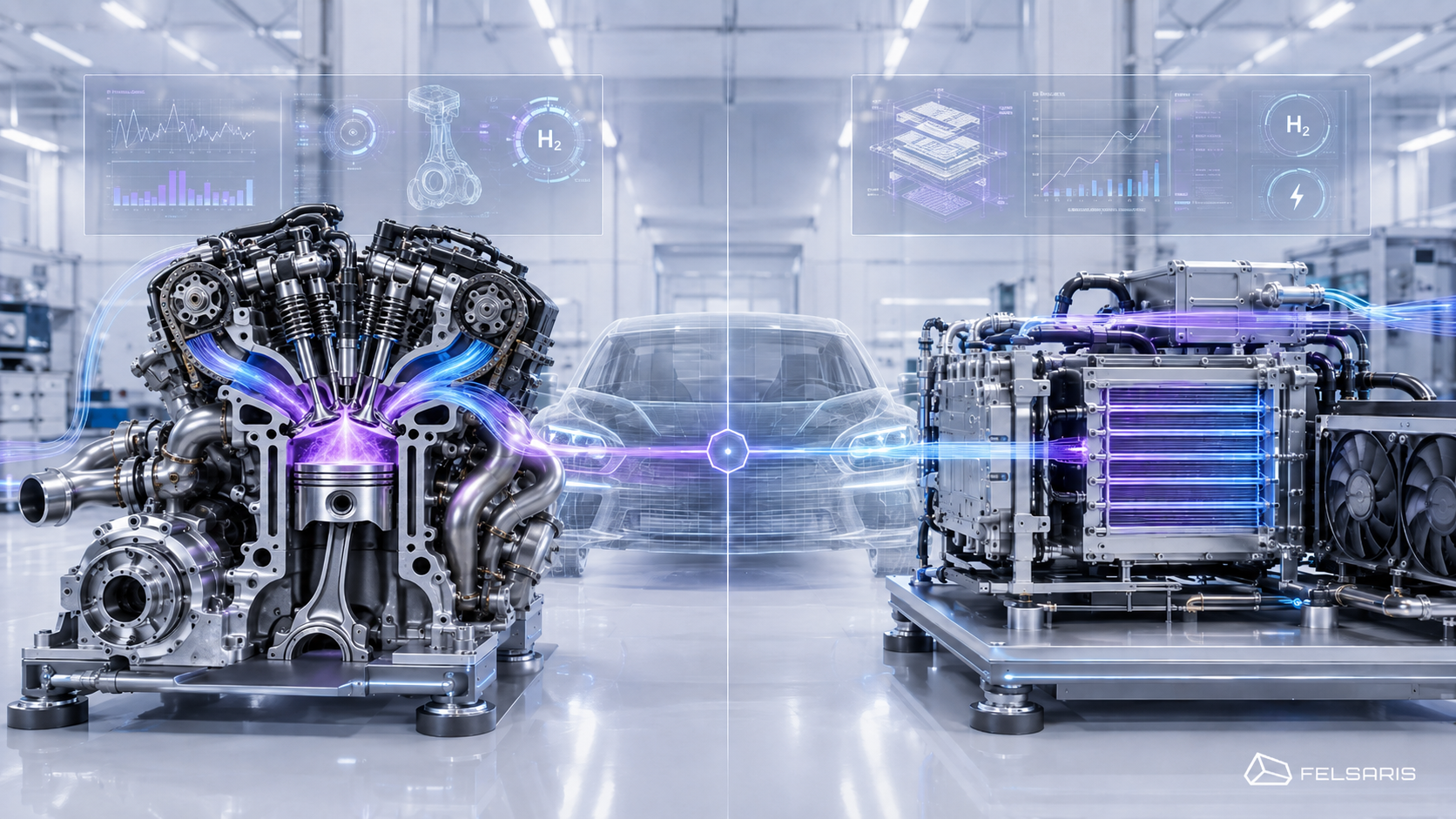
Side-by-side comparison of a hydrogen combustion engine and a fuel cell system with vehicle and technical data overlays

Hydrogen combustion engine or fuel cell: Which hydrogen powertrain suits which application?

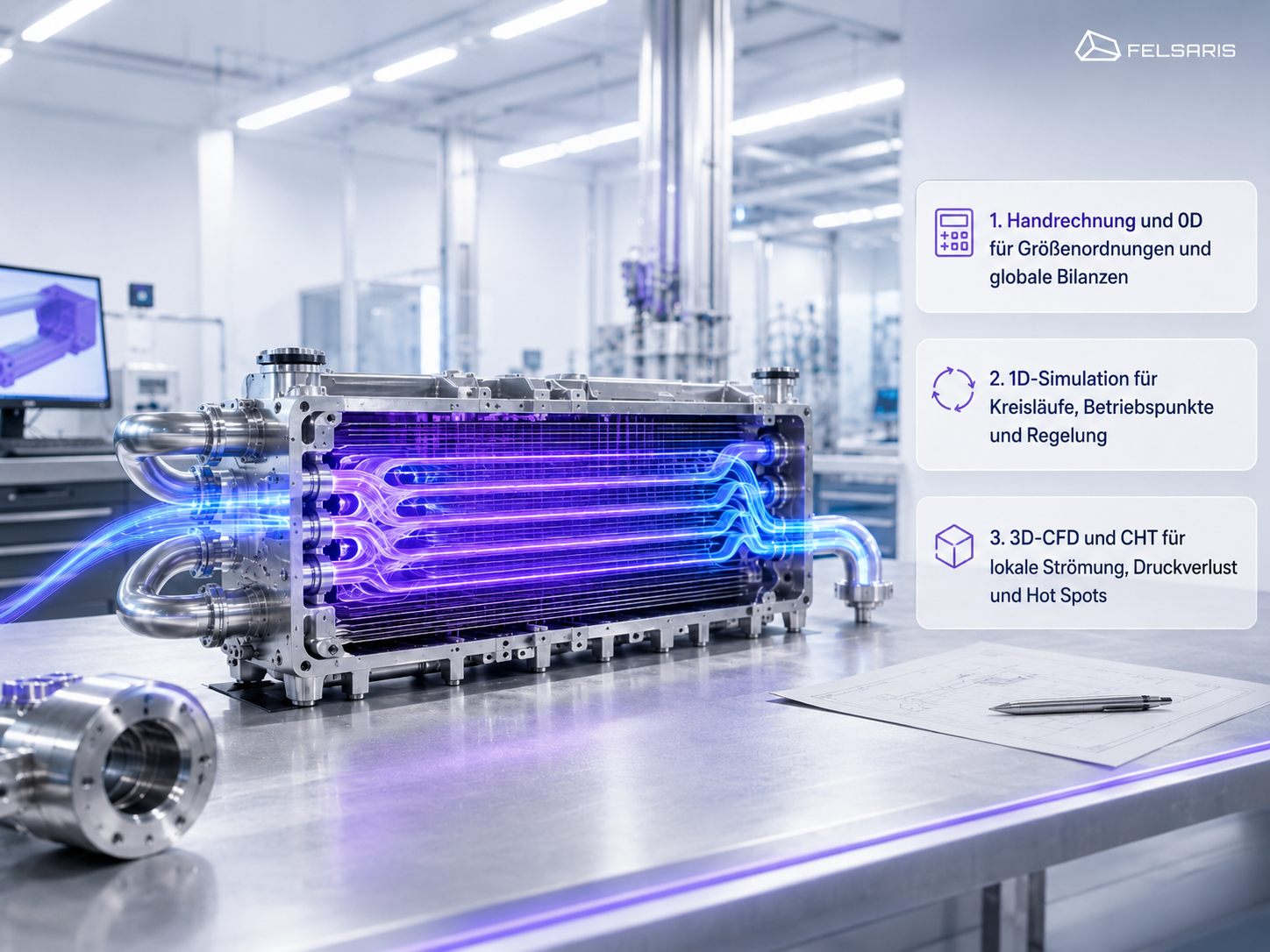
Wärmetauscher mit visualisierter Strömung und den Modellebenen Handrechnung, 1D-Simulation und 3D-CFD

When Is CFD Simulation Worthwhile? Data Requirements, Reliability and Economic Value

When a CFD simulation is worthwhile and when a hand calculation, 0D or 1D model is enough: model levels, data, validation and value.

CFD combustion simulation for e-fuels | 1D, 3D CFD and AI

How CFD combustion simulation supports engine development for e-fuels: injection, spray, mixture formation, reaction kinetics, test bench work and AI surrogates explained from an engineering perspective.

Contact Us

Let us discuss your project. Fill out the form and tell us how we can support you. We will get back to you as soon as possible.